










Ecological Landscapes — Restoring Ecological Function to the Built Environment
Ecological landscapes represent a fundamental shift from conventional landscaping toward living infrastructure designed to deliver measurable environmental performance. By integrating vegetation, engineered growing media, stormwater management, and natural ecological processes into developed environments, these landscapes transform urban spaces into functional, resilient ecosystems.
Ecological landscapes encompass a wide range of applications, including:
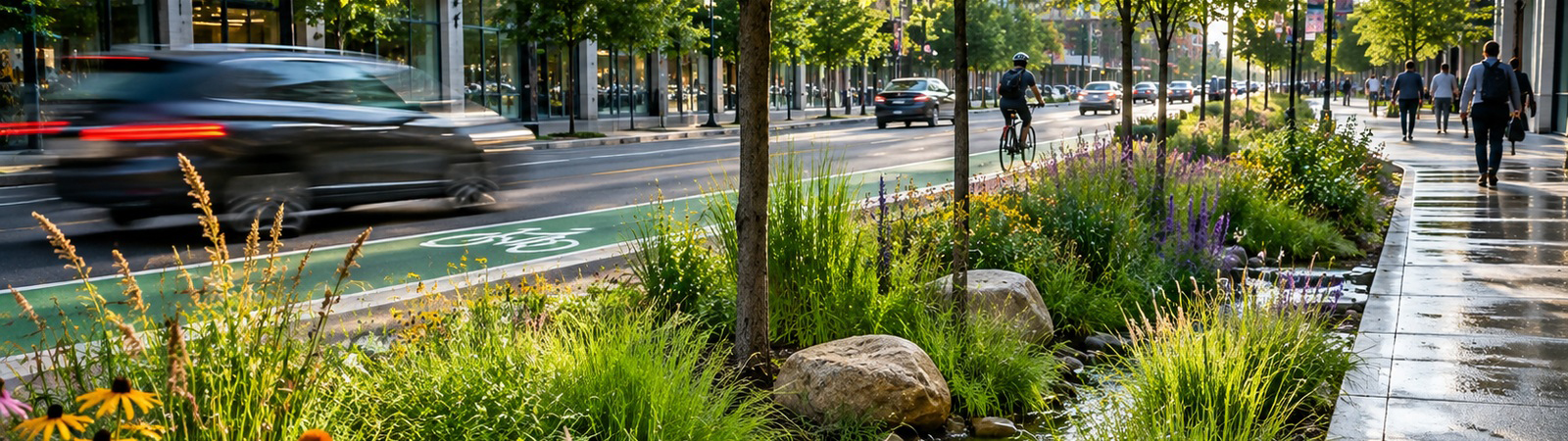
- Bioswales and Rain Gardens – Managing and filtering stormwater runoff.
- Urban Forests – Expanding tree canopies, reducing urban heat, and improving air quality.
- Green Transit Corridors – Integrating vegetation into railways, roadways, and transportation infrastructure.
- Constructed Wetlands – Supporting water management, natural filtration, and habitat creation.
- Biodiversity and Pollinator Habitats – Restoring native ecosystems and supporting wildlife.
- Urban Ecological Regeneration – Transforming vacant lots, former industrial sites, and underutilized urban spaces into productive green environments.
Together, these applications help manage stormwater, reduce urban heat, restore biodiversity, improve environmental quality, and strengthen climate resilience.
At Green Living Tech (GLT), we recognize ecological landscapes as an essential component of the broader living infrastructure framework. Through engineered technologies, technical guidance, professional education, and collaboration with landscape architects, engineers, developers, and industry partners, GLT supports the integration of ecological systems into the built environment. Ecological landscape strategies can also be integrated with Green Living Roof systems to support stormwater management, biodiversity, and urban resilience.
Through engineered technologies, technical guidance, professional education, and collaboration with landscape architects, engineers, developers, and industry partners, GLT supports the integration of ecological systems into the built environment. Explore our Technical Resources for additional system information, specifications, and design documentation.
Our objective is to advance landscapes beyond aesthetics—creating living environments that perform as infrastructure.
Ecological Landscape Design Considerations
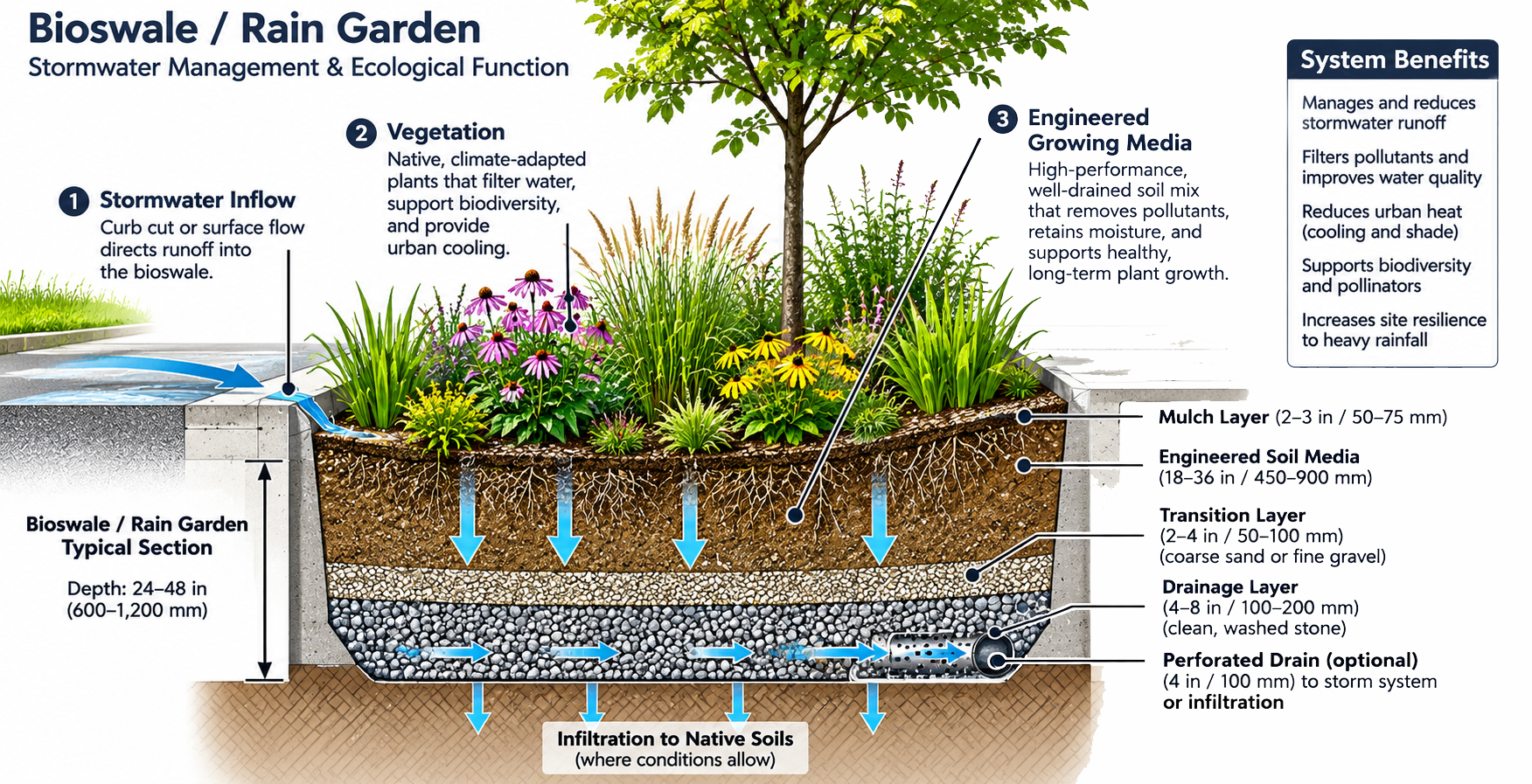
Design Objective: Manage stormwater naturally while improving biodiversity, urban cooling, and climate resilience.
Bioswales & Rain Gardens
Bioswales and rain gardens are engineered landscape systems that capture, filter, and manage stormwater runoff from roads, rooftops, parking areas, and other impervious surfaces.
By combining vegetation, engineered growing media, and drainage infrastructure, these systems transform conventional stormwater management into functional ecological landscapes.
Key Design Considerations
- Stormwater: Runoff volumes, infiltration, and storage capacity.
- Growing Media: Filtration, drainage, and root-zone performance.
- Vegetation: Climate-adapted species and biodiversity.
- Drainage: Native soil permeability, underdrains, and overflow.
- Maintenance: Long-term hydraulic and ecological performance.
Urban Forests & Green Corridors
Urban forests and green corridors integrate tree canopies, native vegetation, and connected green spaces into developed environments. These living systems help reduce urban heat, improve air quality, support biodiversity, and create more comfortable pedestrian and cycling environments.
Through thoughtful landscape design, underutilized urban corridors can become functional ecological infrastructure while maintaining accessibility, visibility, and manageable maintenance requirements.
Key Design Considerations
- Tree Canopy: Species selection, shade coverage, and long-term growth.
- Understory Vegetation: Low-growing, climate-adapted plants that support biodiversity and maintain clear sightlines.
- Soil & Root Zones: Adequate soil volume, drainage, and root development.
- Public Accessibility: Safe pedestrian and cycling routes with clear visibility.
- Maintenance: Durable plant selections and practical long-term management.
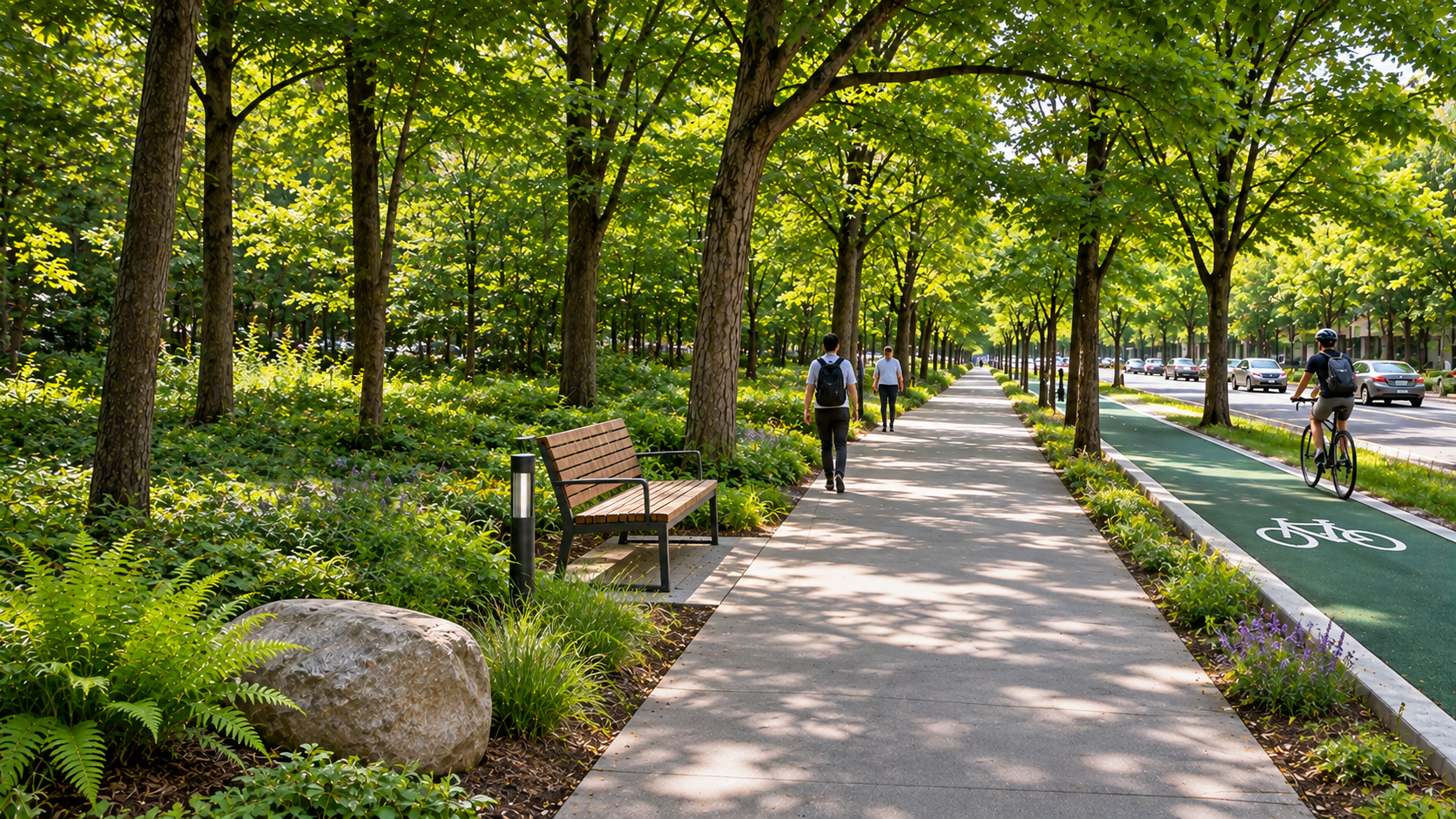
Design Objective: Establish connected urban ecosystems that provide environmental benefits while remaining safe, accessible, and economically sustainable.
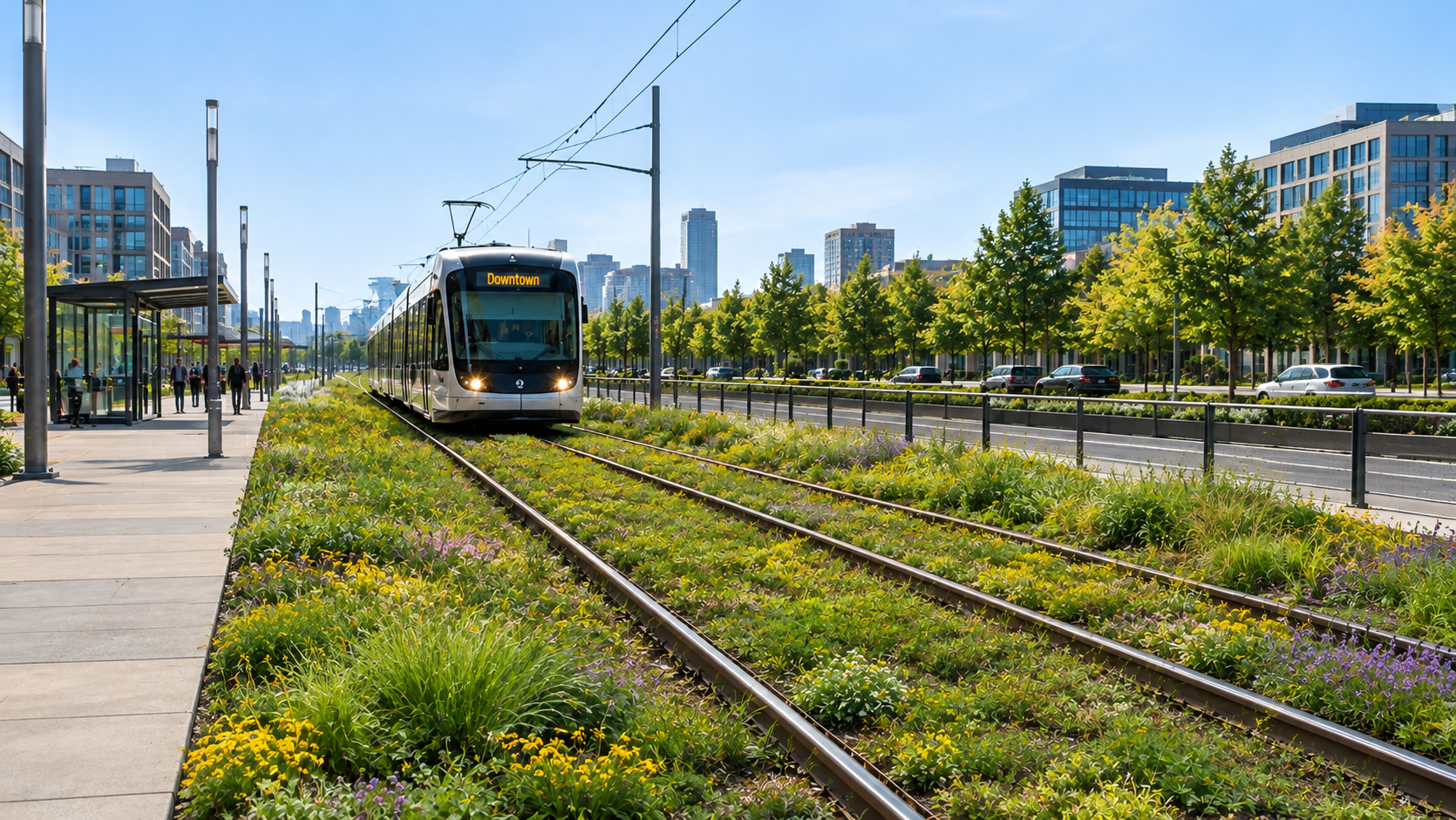
Design Objective: Integrate ecological performance into transportation infrastructure without compromising safety, operational reliability, or maintenance efficiency.
Green Transit Corridors
Green transit corridors integrate low-growing vegetation into railways, tramways, and transportation rights-of-way, transforming conventional infrastructure into functional ecological landscapes.
Vegetated track systems can help reduce surface temperatures, manage stormwater, support biodiversity, and improve the visual and environmental quality of urban transportation networks.
Key Design Considerations
- Vegetation: Low-growing, drought-tolerant species that maintain operational clearances.
- Growing Media: Engineered substrates designed for drainage, stability, and root development.
- Stormwater: Rainfall retention, infiltration, and controlled drainage.
- Rail Safety: Maintain visibility, equipment access, and required track clearances.
- Maintenance: Minimize vegetation growth near critical infrastructure and reduce long-term maintenance demands.
Constructed Wetlands
Constructed wetlands are engineered ecological systems that use vegetation, specialized growing media, and natural biological processes to manage stormwater, improve water quality, and create valuable habitats within developed environments.
These systems integrate water management with landscape architecture, transforming conventional drainage areas into functional ecosystems that support biodiversity and environmental resilience.
Key Design Considerations
- Water Management: Flow rates, retention capacity, and seasonal water levels.
- Water Quality: Sediment removal, nutrient uptake, and biological filtration.
- Vegetation: Native aquatic and wetland species suited to local conditions.
- System Design: Appropriate water depths, hydraulic pathways, and engineered substrates.
- Maintenance: Sediment management, vegetation control, and long-term hydraulic performance.
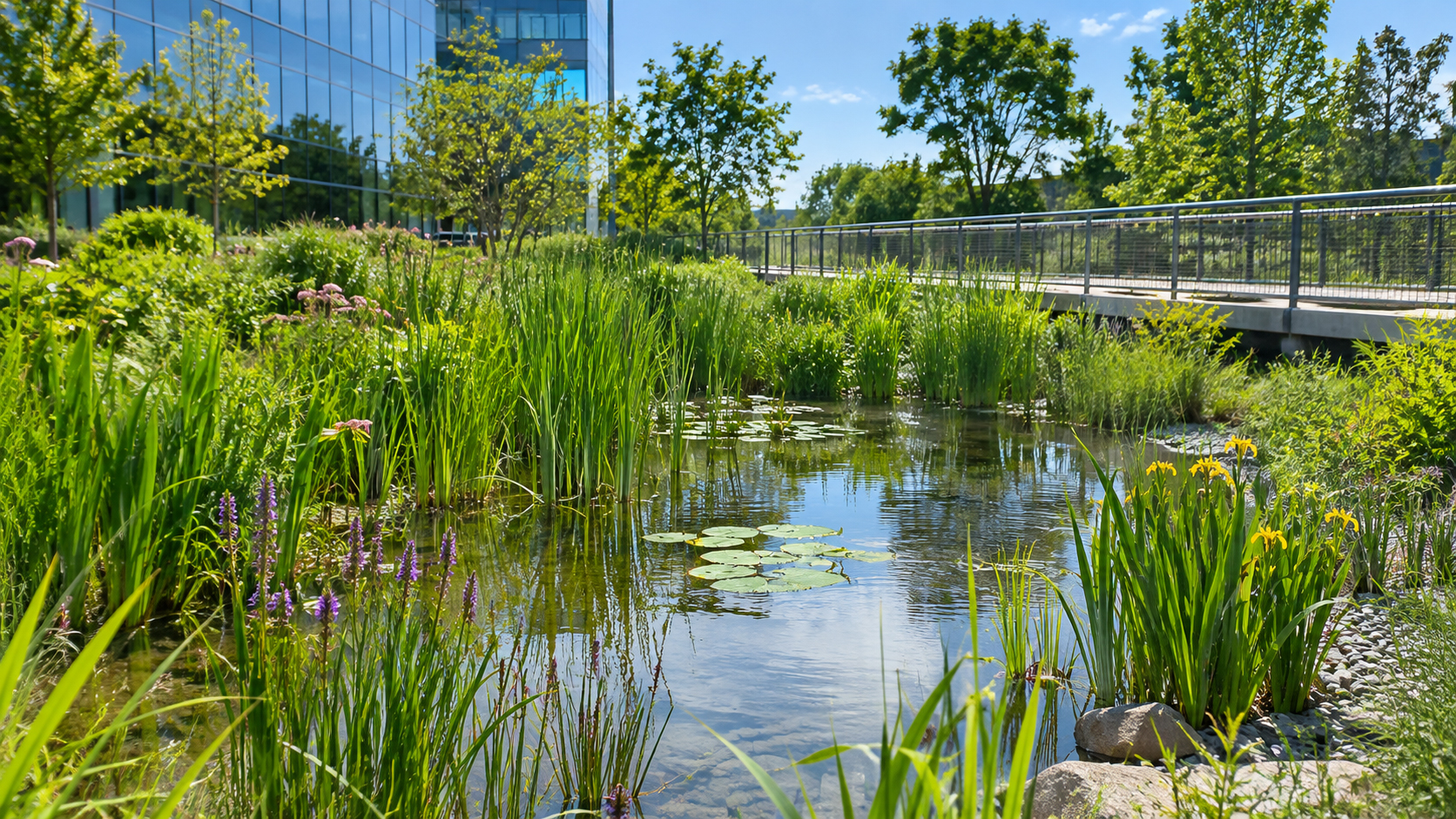
Design Objective: Create functional wetland ecosystems that improve water quality, manage stormwater, and support biodiversity while integrating naturally into the built environment.
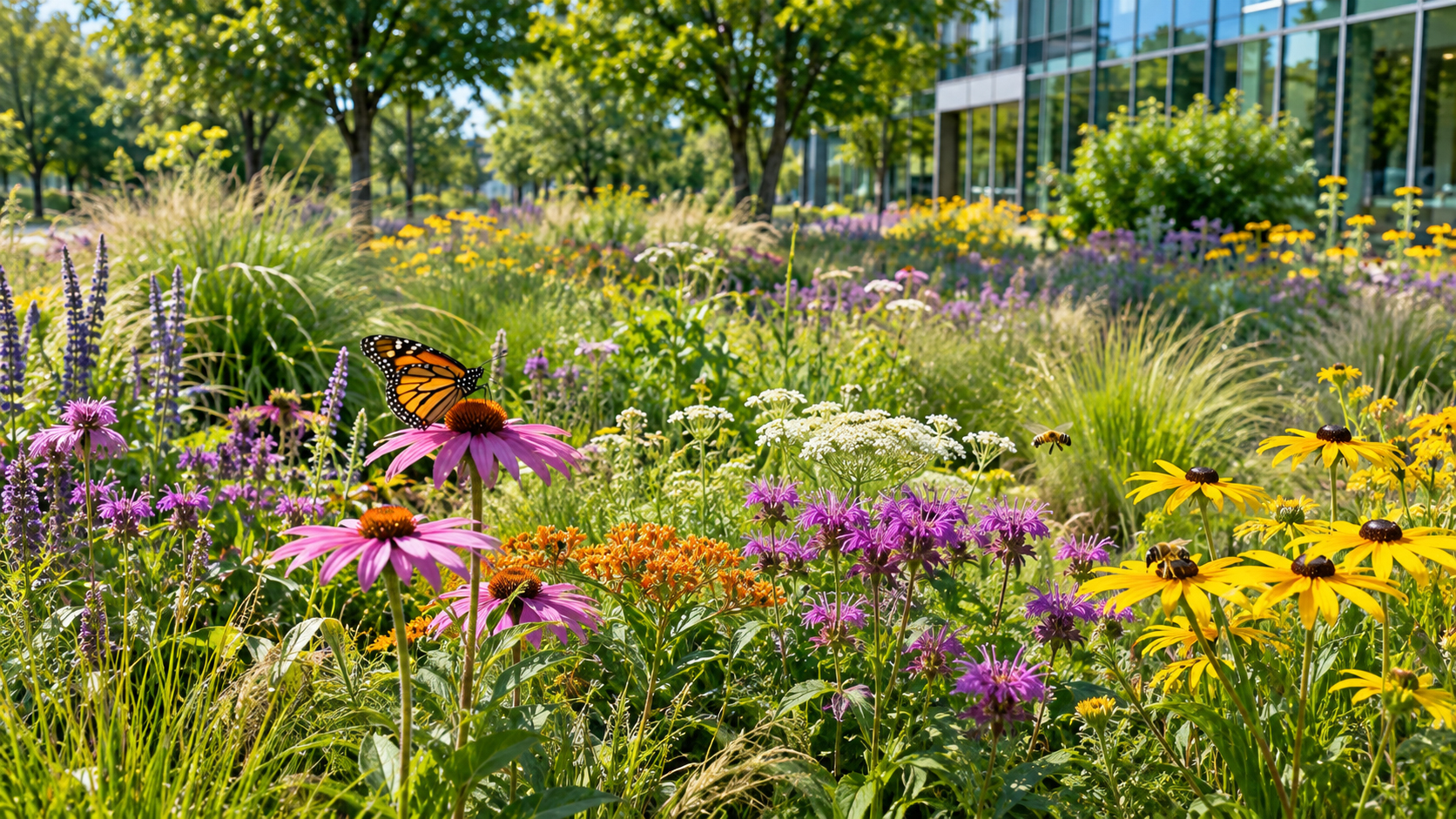
Design Objective: Create resilient, biodiverse landscapes that support pollinators, restore ecological function, and provide measurable environmental value within the built environment.
Biodiversity & Pollinator Habitats
Biodiversity and pollinator habitats integrate native wildflowers, grasses, and climate-adapted vegetation into developed landscapes, creating ecological environments that support bees, butterflies, birds, and other beneficial wildlife.
These landscapes help restore ecological connectivity, improve soil health, and provide essential food and shelter for native species while reducing reliance on conventional ornamental landscaping.
Key Design Considerations
- Native Vegetation: Regionally appropriate species supporting local ecosystems.
- Pollinator Support: Diverse flowering periods to provide seasonal nectar and pollen.
- Habitat Connectivity: Link isolated green spaces to strengthen ecological networks.
- Soil & Water: Healthy growing media, appropriate drainage, and efficient irrigation.
- Maintenance: Minimize chemical inputs and establish practical seasonal management.
Urban Ecological Regeneration
Urban ecological regeneration transforms vacant lots, former industrial properties, and underutilized urban spaces into functional green environments that restore ecological value and improve community wellbeing.
Through soil restoration, native vegetation, stormwater management, and thoughtful landscape design, these projects can revitalize neglected properties while creating accessible, resilient, and economically practical green spaces.
Key Design Considerations
- Site Assessment: Existing conditions, contamination risks, and redevelopment constraints.
- Soil Restoration: Remediation, engineered growing media, and healthy root-zone development.
- Vegetation: Climate-adapted native species suited to site conditions.
- Stormwater: Infiltration, runoff management, and appropriate drainage infrastructure.
- Maintenance: Accessible layouts, durable materials, and practical long-term management.
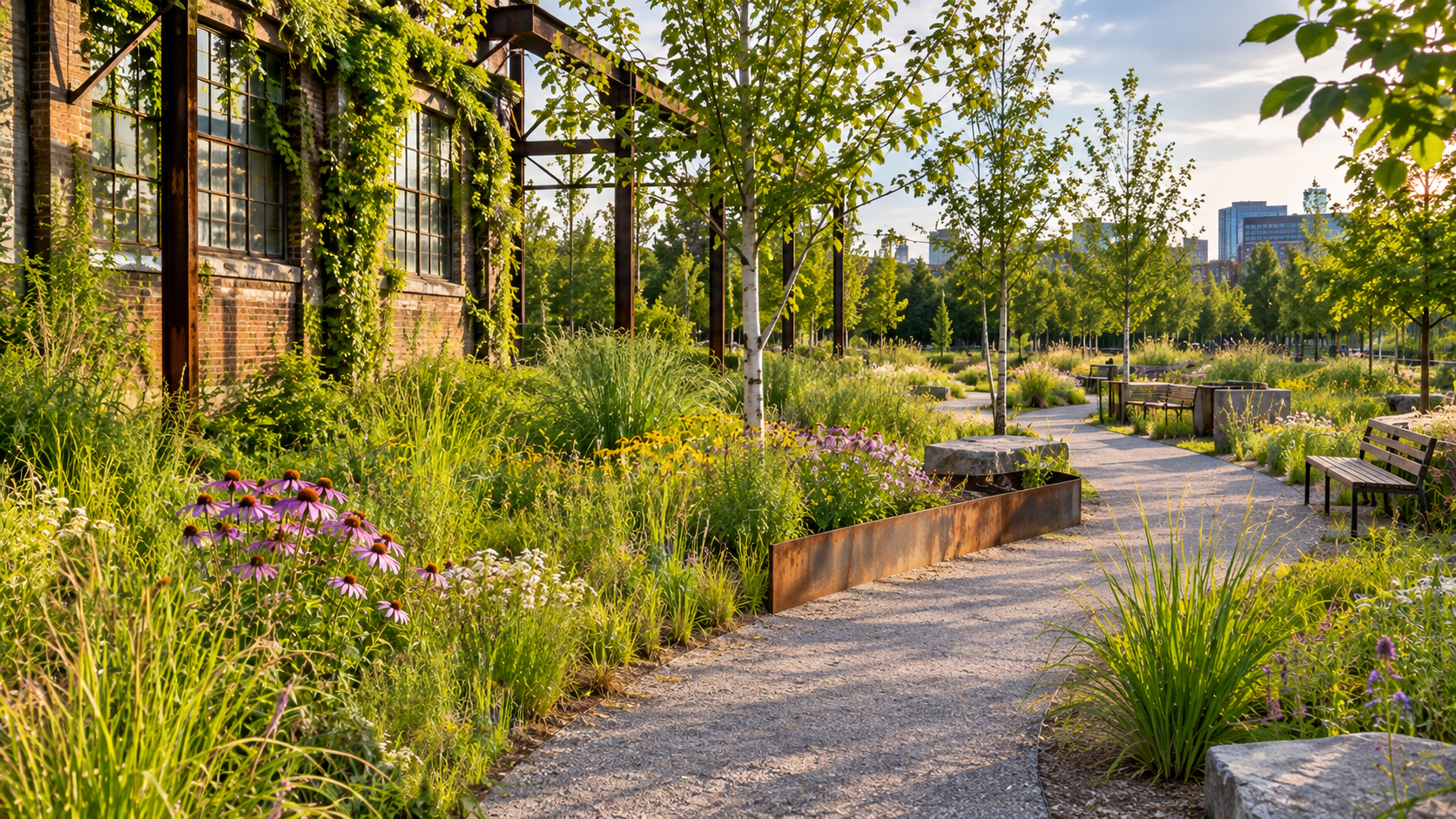
Design Objective: Transform underutilized urban properties into productive ecological landscapes that restore environmental function, strengthen communities, and support sustainable redevelopment.